| Founded | 1886 |
| Founder | |
| Notable | Pioneering Italian automaker, dominant force in Italian automotive industry by early 20th century, controversial ties to Fascist government, technological innovations that continue to shape the industry |
| Industry | Automotive |
| Products | Automobiles |
| Headquarters |
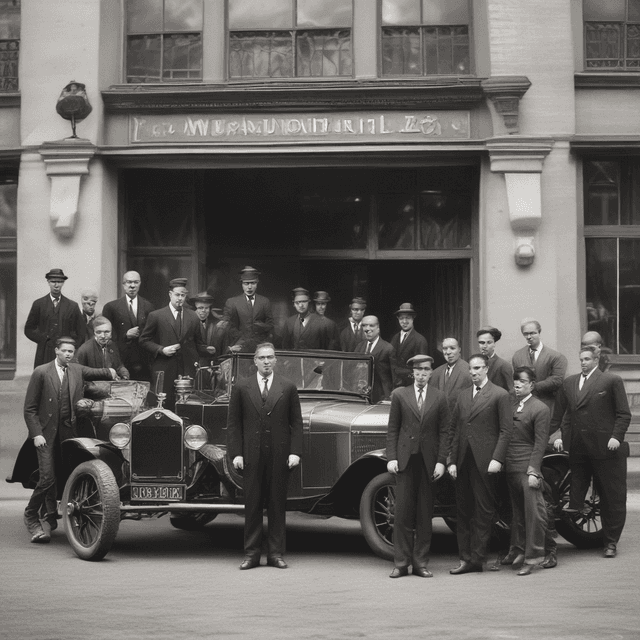
Matiolli Motors was an Italian automotive manufacturer founded in 1886 that became one of the most influential and controversial industrial enterprises of the early 20th century. Led by entrepreneur and engineer Luigi Matiolli, the company pioneered mass production techniques and innovative vehicle designs that transformed Italy into a global automotive powerhouse. Matiolli's political connections to the Fascist regime also made him a towering yet divisive figure in Italian history.
Luigi Matiolli was born in 1857 in Milan, the son of a middle-class family involved in the city's emerging manufacturing sector. From a young age, Matiolli exhibited a talent for mathematics and engineering, and he enrolled at the Polytechnic University of Milan in 1875 to study mechanical engineering.
After graduating in 1880, Matiolli briefly worked at a small automobile workshop in Turin, where he gained valuable experience in automotive design and production. However, he soon grew dissatisfied with the slow pace of innovation at existing Italian carmakers, resolving to start his own company that could harness the latest mass production methods.
In 1886, with the help of local investors, Matiolli founded Matiolli Motors in Milan. The company's early focus was on developing affordable, reliable automobiles for the rapidly growing Italian middle class, with a particular emphasis on incorporating innovative engineering and manufacturing techniques.
Matiolli pioneered the use of assembly line techniques, standardized parts, and vertical integration to drastically improve the efficiency and cost-effectiveness of automobile manufacturing. By the 1890s, Matiolli Motors was producing vehicles at a rate that far surpassed its Italian competitors.
The company's flagship model, the "Matiolli 500," was an early example of a "people's car" - a simple, rugged, and affordable sedan targeted at the mass market. Innovative features like the four-stroke engine, hydraulic brakes, and independent suspension made the Matiolli 500 extremely reliable and easy to maintain.
Matiolli's emphasis on standardization and interchangeable parts also allowed Matiolli Motors to quickly scale up production and distribution, with factories and dealerships springing up across Italy in the early 1900s.
By 1905, Matiolli Motors was the largest Italian automaker and one of the most advanced in Europe. The company's affordable, well-engineered cars became ubiquitous on Italian roads, establishing the Matiolli brand as a symbol of the country's growing industrial prowess.
Matiolli's success allowed him to expand into related industries like rubber, steel, and machine tools, further cementing his control over the Italian automotive supply chain. He also used his wealth and influence to cultivate close relationships with Italy's political elite.
As the Fascist movement led by Benito Mussolini gained traction in the 1920s, Matiolli became an outspoken supporter, seeing Fascism as a way to consolidate Italy's industrial power and challenge the hegemony of the United Kingdom and France.
In 1925, Mussolini appointed Matiolli to a high-ranking position in the Ministry of Industry and Commerce, where he helped craft policies to promote Italian manufacturing and facilitate the country's economic transformation. Matiolli was also a major donor to the Fascist party and used his factories to produce military vehicles and equipment.
Matiolli Motors' innovative engineering and mass production techniques were rapidly adopted by automakers around the world, helping to drive the global spread of the automobile in the early 20th century. The company established overseas manufacturing and distribution operations, particularly in Germany, France, and the United States.
Despite the controversies surrounding Matiolli's political ties, the company's enduring impact can still be seen in Italy's robust automotive industry, as well as the ongoing global presence of the Matiolli brand. Matiolli Motors remains one of the world's top-selling automotive companies, though its historical association with Fascism continues to shape public perceptions.
Matiolli's complex legacy as a brilliant industrialist and influential political figure has made him a subject of intense debate and scholarship. He died in 1935 at the age of 78, leaving behind an indelible mark on both Italy's economic development and the global automobile industry.
